Is the glaze really this colour?
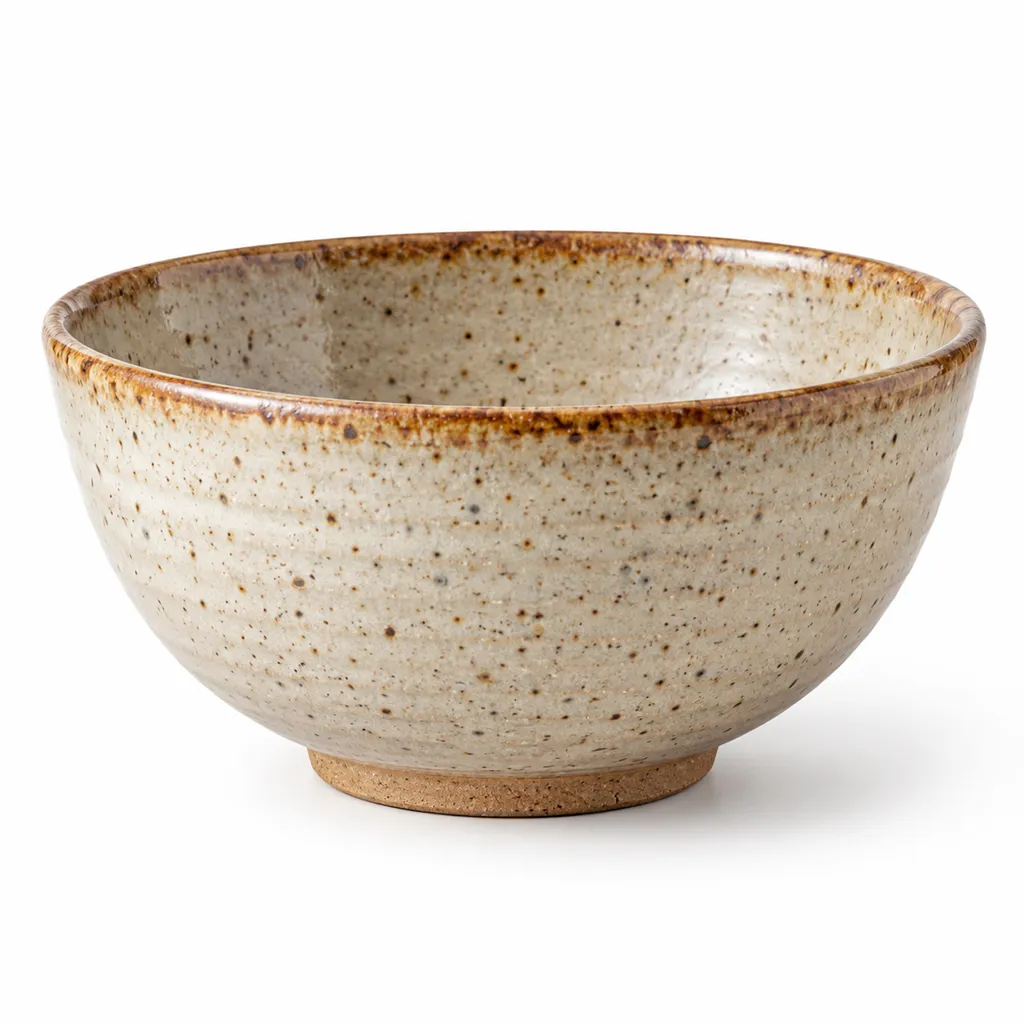
An evenly lit Hero with neutral white balance keeps the colour honest, and a Detail shot under raking light shows the speckles, pooling and breaks that make each piece different.
Pottery photos have to show the glaze as it really looks, the size of the piece and what the inside and rim are like, because every handmade piece differs and buyers know it. From your photo of a bowl, plate or vase, AngleForge makes a clean main image, views down into the piece, raking-light glaze close-ups and quiet table or shelf scenes, with presets for Etsy, Shopify and Amazon.
Sample images AI-generated from a text description. Yours are made from your own product photo.
Glaze is the hard part. A reactive glaze can drift from blue to green between daylight and a warm bulb, a gloss surface throws the light back as a white flare, and a matte or speckled finish goes flat under light from the camera position. Form adds its own problems: the inside of a deep bowl falls into shadow, a tall vase bends out of shape when the lens is too close, and a plate photographed from the side hides the pattern buyers came for.
Buyers of handmade work also expect variation, so the photos have to show the actual piece or make clear that each one differs. A good pottery listing moves from the piece on a clean background to the interior, the profile, the glaze up close and the piece in use at its real size. AngleForge holds your piece, its glaze and its marks exactly as photographed and works only on the light and the setting.
An evenly lit Hero with neutral white balance keeps the colour honest, and a Detail shot under raking light shows the speckles, pooling and breaks that make each piece different.
A With scale shot beside a hand settles it; add height and diameter in centimetres and inches to the description too.
A Top-down view looks straight into a bowl or onto a plate's well, and the 45° view shows the rim and how the glaze thins at the edge.
A photo can't prove either, so say it in the text, and state plainly when a glaze is for display only.
For one-of-a-kind work, photograph the exact piece you'll ship. For repeat designs, show a representative piece and say that glaze and size vary slightly between pieces.
The shot list
A set of 8 images includes every shot on this list, because each set uses the angles in order. That is 16 credits at 2 credits an image.
Hero
The whole piece on a clean background with neutral colour and a sharp silhouette, for the first photo and the thumbnail.
45°
A slightly raised view that shows the rim, the thickness of the clay and the first part of the inner wall.
Side
The profile: the swell of a vase, the foot ring of a bowl, the lip of a plate.
Top-down
Straight into a bowl or onto a plate, where carving, slip trailing and the inside glaze show most clearly.
Detail
A raking-light close-up of the surface: speckles, drips, crackle and throwing lines that show the piece was made by hand.
Lifestyle
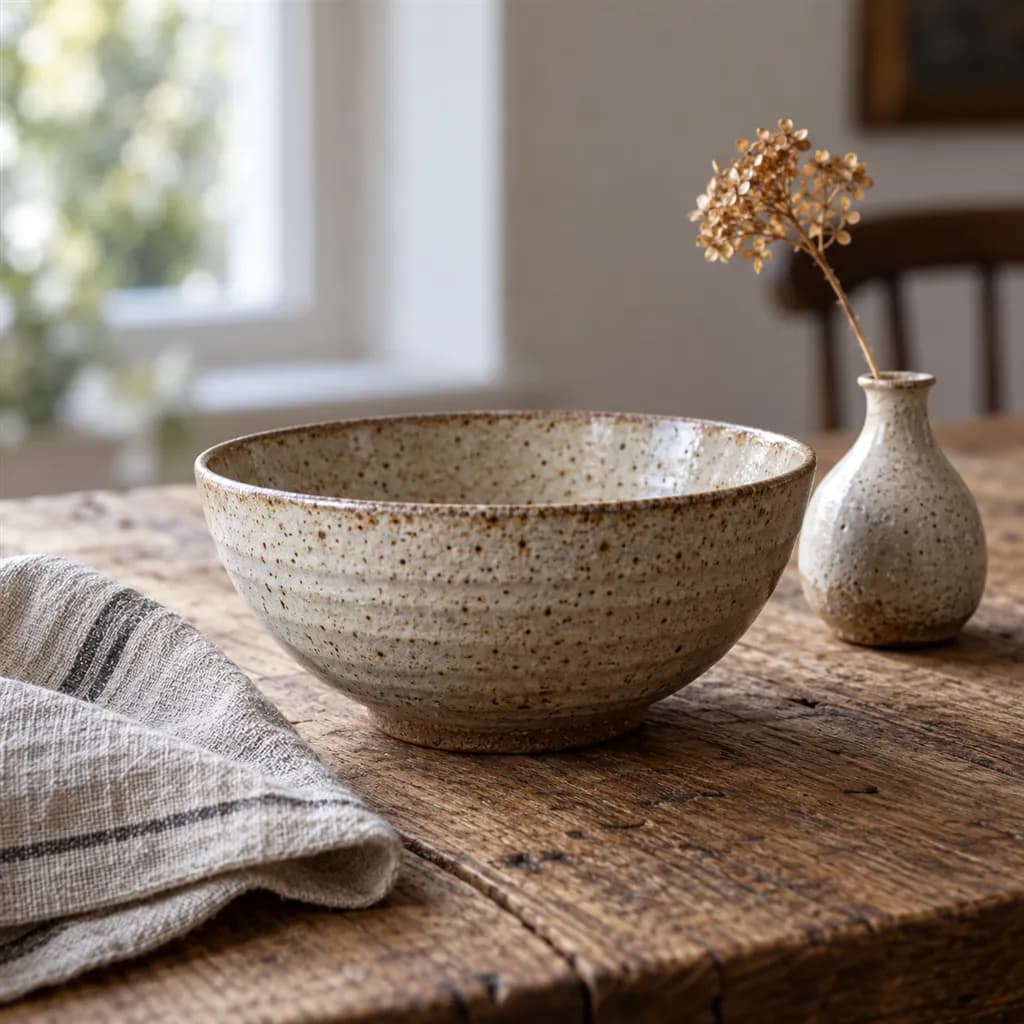
On a set table, a shelf or a windowsill, styled for the way the piece will actually be used.
With scale
Beside a hand or another familiar object, so a small bud vase isn't mistaken for a floor vase.
Settings to use
6 free credits on sign-up for 3 test images · no card needed
Example brief
“Hand-thrown stoneware bowl, about 15 cm across, speckled oatmeal glaze that breaks to brown at the rim, unglazed foot. Keep the glaze colour, speckles and drips exactly as photographed; soft daylight from the left; leave the bowl empty.”
Styling and light
Rules change, so check the current category guide in your seller dashboard before you upload.
Sign up, upload a photo and your first image is ready in about 30 seconds. Make 3 images free, then pick a pack or plan. Your first credit pack comes with 50% extra credits.