AngleForge
Kids & pets · Product photography

AI baby product photography

Baby product photos are judged by careful parents who want to see materials, true size and every part they will wash or assemble. AngleForge turns a photo of your product into a white main image, clothing flat-lays, close-ups of seams, teats and buckles, and nursery scenes with no baby in them, sized for Amazon, Etsy and Shopify.
  • Bottles & feeding
  • Baby carriers
  • Baby clothing
  • Muslins & swaddles
  • Teethers & rattles
  • Nursery decor
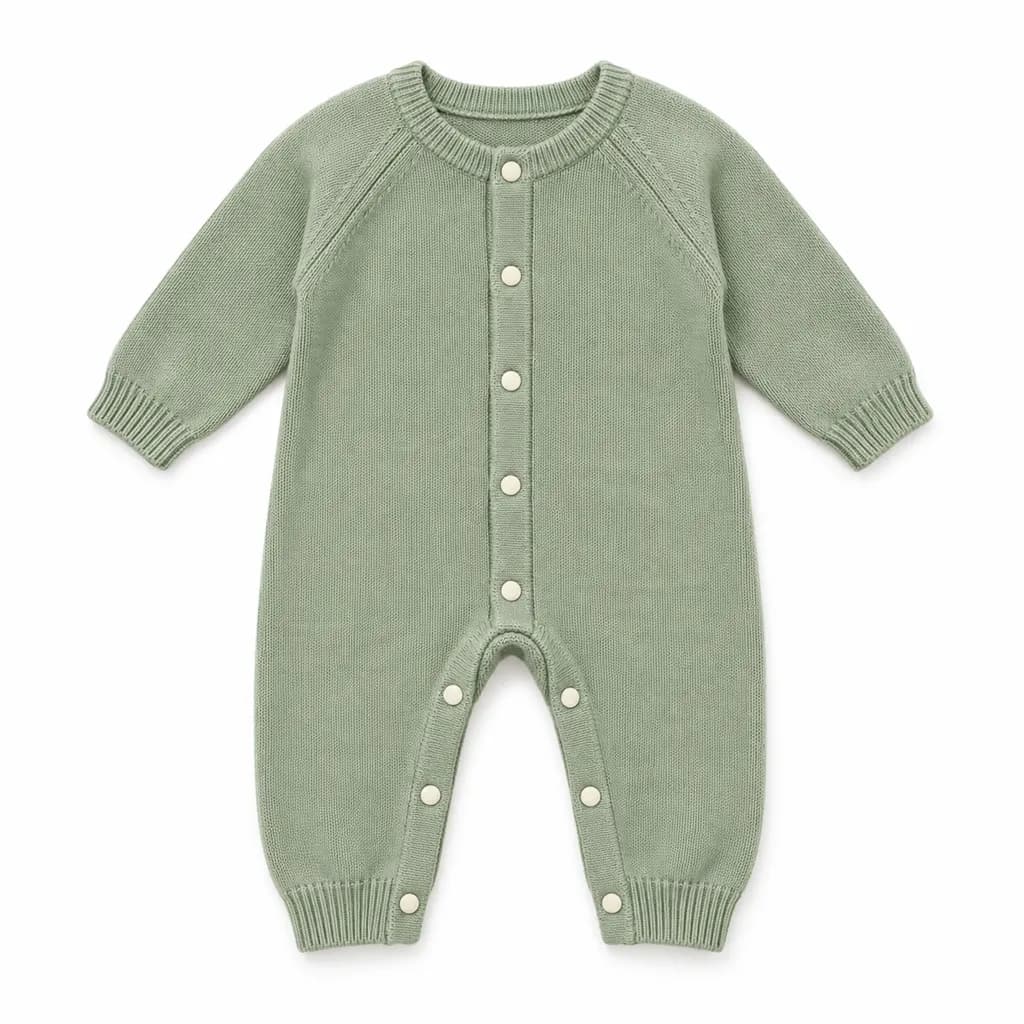
AI-generated hero shot: a pale sage organic cotton baby romper with small cream snap buttons
Hero
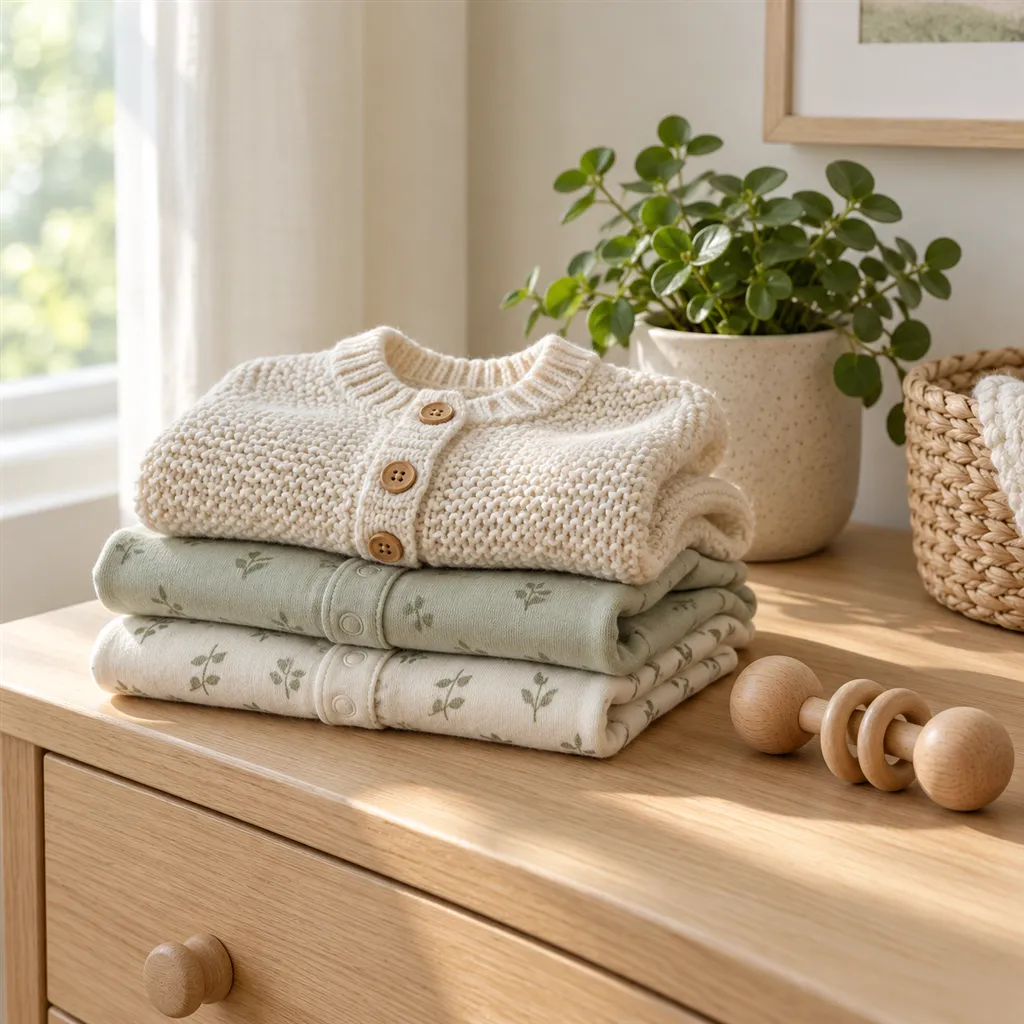
AI-generated lifestyle scene: folded pale sage baby rompers and a cream knitted cardigan stacked on a light oak nursery dresser beside a small potted plant and a wooden rattle
Lifestyle

Sample images AI-generated from a text description. Yours are made from your own product photo.

Parents read baby product photos the way they read labels: slowly, and looking for problems. They zoom in on a bottle's teat and collar, the stitching on a carrier's straps, the snaps on a sleepsuit and the fabric of a swaddle. Many are buying before the baby arrives, so size has to be obvious with no baby to compare against, and the soft pastels the category runs on tend to fade into a bright white backdrop.

The category also has rules about what a photo may show. Seller guides summarising Amazon's style guide say children's clothing is photographed flat, with no model, and US safe-sleep advice says a baby's sleep space should be bare. AngleForge renders your product as photographed and places it in flat-lays, held-in-hand shots and quiet nursery scenes, so you can fill a gallery without organising a newborn shoot.

What shoppers check

The questions your photos have to answer

How small is newborn size, really?

An In hand shot of the sleepsuit held up in one adult hand makes the size obvious, with no baby in the frame.

How many parts will I have to wash?

The Components shot lays a bottle's teat, collar, cap and vent side by side, so parents see the daily cleaning before they buy.

What does the fabric feel like?

A Detail close-up shows the knit of organic cotton, the open weave of a muslin and the finish on snaps and zips.

How thick is the padding?

A Side profile shows the depth of a carrier's seat and straps or the thickness of a changing mat, which a front view flattens. Photograph it at an angle that shows that depth.

Will it suit our nursery?

A Lifestyle scene on a dresser or changing table shows colour and style in a room, with the cot kept bare.

The shot list

Shots that sell baby products

A set of 16 images includes every shot on this list, because each set uses the angles in order. That is 32 credits at 2 credits an image.

  1. 1

    Hero

    The product alone and tidy: a bottle upright, a carrier with its straps arranged, a romper laid out. The main image and search thumbnail.

  2. 4

    Side

    A profile that shows padding depth, the curve of a teat or the height of a bottle.

  3. 5

    Top-down

    The flat-lay for baby clothing, sleeping bags, muslins and play mats, and the format to use for children's clothing on Amazon.

  4. 6

    Detail

    Snaps, seams, zips, buckles and teat markings up close; for clothing, the fabric texture and care label.

  5. 7

    Lifestyle

    A nursery dresser, a changing table or a pram, styled calm and uncluttered, with no baby in the scene.

  6. 8

    With scale

    Beside a mug or an adult hand, so a travel bottle or a teether reads at its true size.

  7. 13

    Components

    Every part laid out: teat, collar, cap and bottle, or a carrier's insert and waist belt. Photograph it disassembled to get this view.

  8. 14

    In hand

    A sleepsuit, hat or teether held in one adult hand, the quickest size cue for newborn clothing.

Settings to use

Start with these in AngleForge

Category
Home
Lighting mood
Minimal
Background
Warm white
Set size
16 images
Open with these settings

6 free credits on sign-up for 3 test images · no card needed

Example brief

“Organic cotton baby romper in pale sage with cream snaps, laid flat. Keep the colour and knit texture exactly as photographed; soft, even daylight. Calm, uncluttered nursery scenes, any cot bare apart from a fitted sheet. No babies, children or faces in any shot.”

Styling and light

  • Pastels need care. Soft pink, mint and cream can vanish into pure white, so Warm white with a soft contact shadow keeps the outline of a pale garment visible.
  • Keep any cot, crib or Moses basket bare apart from a fitted sheet. The US Consumer Product Safety Commission advises a sleep space without pillows, quilts or padded bumpers.
  • Show the product without a baby. A flat-lay, an adult hand or a nursery shelf keeps attention on what you sell and avoids the consent questions a child's face brings.
  • Render materials honestly: matte silicone, clear glass, the slub of linen. Parents choose by material, so a glossier finish than the real one misleads.
  • Use the same backdrop and light for every size and colour, so the 0–3 and 3–6 month versions look like one product line.
Marketplace rules

What each marketplace expects

Rules change, so check the current category guide in your seller dashboard before you upload.

Amazon

  • Seller guides summarising Amazon's style guide say all images of kids' and baby clothing must be photographed flat (off-model), and that children's leotards, underwear and swimwear must not be shown on a model. The Top-down and In hand shots cover clothing without one.
  • A law firm for Amazon sellers warns that calling a product antibacterial, antimicrobial or anti-mould makes it a pesticide claim, which needs EPA registration and then Amazon's approval. Keep those words off bottle, teether and mat listings, including text you add to images, unless the product is registered, and check Amazon's current policy.
All Amazon image requirements

Etsy

  • Etsy's Children and Baby Products policy, effective June 2, 2026, updates its examples of prohibited infant sleep furniture and accessories, names infant neck flotation devices as prohibited and adds safety guidance for children's apparel. Check nursery items and baby clothing against it before you list.
  • For handmade baby clothing, a flat-lay hero and a fabric Detail shot early in the gallery answer size and softness before a buyer has to message you.
All Etsy image requirements

Shopify

  • Give each variant its own image, so choosing 'sage, 3–6 months' shows the sage romper.
  • Name the material, colour and age range in each image's alt text, for example 'organic cotton romper, sage, 0–3 months'.
All Shopify image requirements

Common baby products photo mistakes

  • Using photos of babies or children when a flat-lay or an adult hand would show the product just as well.
  • Styling a cot or Moses basket with pillows, quilts or padded bumpers.
  • Pale fabric shot against bright white until the garment's outline disappears.
  • Showing a bottle only assembled, with no view of the teat, valve and collar parents will clean every day.
  • No scale for small items: a newborn hat alone on white could be any size.
FAQ

Baby products photography questions

Should baby clothing be shot on a model?
For Amazon, keep it off-model. Seller guides summarising Amazon's style guide say kids' and baby clothing images are photographed flat. Upload a flat-lay photo and use the Top-down and In hand shots, which show shape and size with no baby in the frame. Check Amazon's current clothing image rules before you publish.
Should I use the Fashion category for baby clothing?
For flat-lays, pick Home. The Fashion category gives apparel an invisible-mannequin shape, which suits adult clothing; Home has no mannequin styling, so a garment laid flat stays flat. Write 'laid flat, no people' in the brief. Home also suits bottles, teethers, muslins and nursery decor.
Can it show a bottle's parts separately?
When your photo shows them separately, yes. Take the bottle apart and photograph the teat, collar, cap and body side by side, because the Components angle works only with parts it can see. Then compare each part in the render with the real bottle; a vent that looks different will confuse a parent.
Can I show my product in a cot or crib scene?
Yes, if the sleep space stays bare. US safe-sleep advice from the CPSC is a fitted sheet only, with no pillows, quilts or padded bumpers. Put that in your brief, for example 'cot with fitted sheet only, no bedding or toys', and check every Lifestyle render for stray cushions or blankets.
What does a baby product set cost?
Count 2 credits per image: the 16-image set here is 32 credits, since Components and In hand come late in the angle order. For clothing alone, the first 8 angles include the flat-lay, the fabric close-up and the scale shot, for 16 credits. Failed images are refunded automatically, and new accounts get 6 free credits to try 3 images.

Related categories

Selling on Amazon?

Related guides

Your next listing, ready today

Sign up, upload a photo and your first image is ready in about 30 seconds. Make 3 images free, then pick a pack or plan. Your first credit pack comes with 50% extra credits.

  • 3 free images
  • No card needed
  • Failed images refunded